

Education Hub
WATER EDUCATION
Water is easy to oversimplify.
A noticeable taste does not tell you exactly what is in the water. Scale on a shower screen is not the same thing as contamination. A city water report provides useful context, but it cannot tell you everything happening inside one property.
Seeing the word chlorine, fluoride or PFAS online does not automatically tell you what treatment — if any — your home needs.
Good decisions begin by separating what you notice, what you know and what actually matters to you. That is what the WAA Education Hub is here to help with.
Clear answers to your water questions.
Most people do not need a course in water chemistry. But it helps to understand a few things before comparing filtration systems: where your city water comes from; why chlorine or chloramine is used; what hardness and scale mean; what activated carbon can do; when reverse osmosis or UV makes sense; and what evidence should support a removal claim.
Understanding those basics changes the product conversation. Instead of asking, “Which system has the most stages?”, you can ask, “What does each stage actually do?”

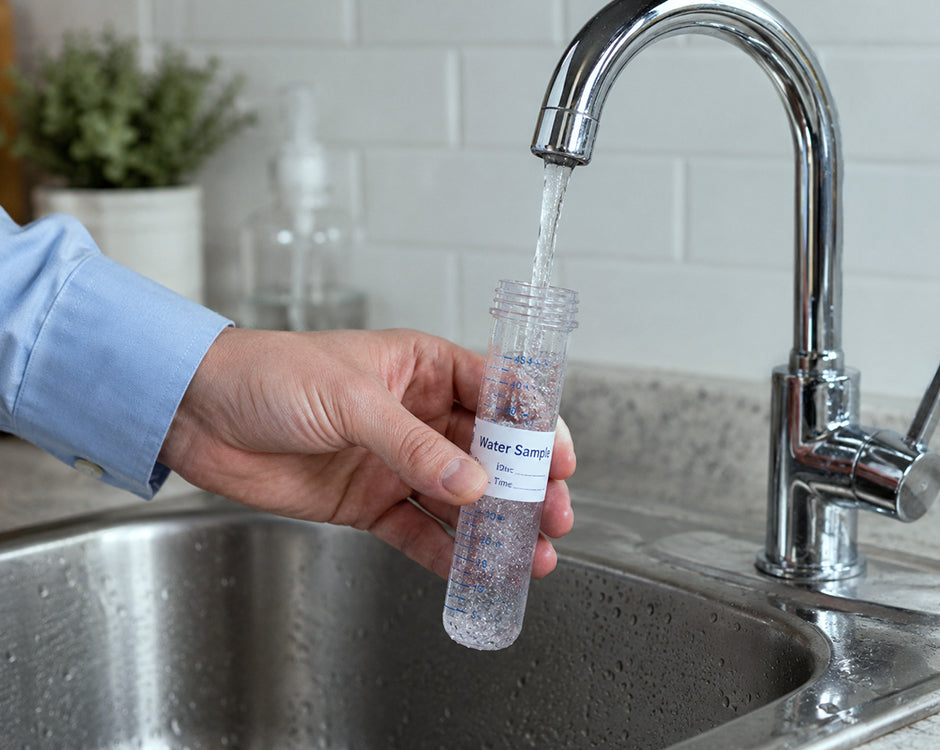

Start with the question you already have.
You do not need to read the Education Hub from beginning to end. Choose the route closest to what you are trying to understand.
FAQs
I just want the practical answer. Find concise guidance on whole-home filtration, pairing whole-home and RO, apartments, pressure, installation time, filter replacement, softening versus scale management, chlorine, chloramine, fluoride or PFAS treatment, showroom visits and what makes WAA different.
Public treatment and personal choice
Public drinking-water treatment serves communities and manages risks across the network. Household treatment has a different brief: changing taste, odour, sediment, scale behaviour, a supported substance concern or kitchen delivery. Choosing additional filtration does not mean the public water system has failed; it can simply add another level of choice at home.
Choose the guide that matches your question
Taste or smell? Scale around taps? A specific water-quality concern? Start with the guide that matches your question, then compare suitable filtration methods or ask WAA for help.
Useful information should reduce fear — not create it.
HOW WE WRITE ABOUT WATER
The water industry can make almost any subject sound alarming. Education works better when the boundaries are visible.
Before choosing a treatment, work out what kind of question you have.
- Something tastes or smells different. Start with observation: one tap or the whole house, hot or cold, and whether the change was sudden. Follow the Taste & Odour Guide, then the relevant City Water Guide, and contact WAA if the change remains unexplained.
- I keep seeing white scale. Start with hardness and mineral behaviour. Decide whether you want to manage deposits or soften the water by removing hardness ions.
- I’m worried about PFAS. Start with evidence and compound specificity. Identify which compounds are relevant and what product-specific evidence exists.
- I just want better drinking water. Define the outcome: taste, reverse osmosis, a named dissolved substance, mineral profile, or chilled, hot or sparkling convenience.
- I want to filter the entire house. Define the treatment job: sediment, residual disinfectant, scale management, or a broader water experience throughout the property.

Go deeper through WAA articles
Some questions deserve more than a paragraph. Explore detailed reading on first-draw versus flushed lead samples, fluoride treatment by carbon versus RO, PFAS capacity and breakthrough, RO recovery ratio, and why boiling or carbon does not solve nitrate in bore water.
Turn understanding into the right next step
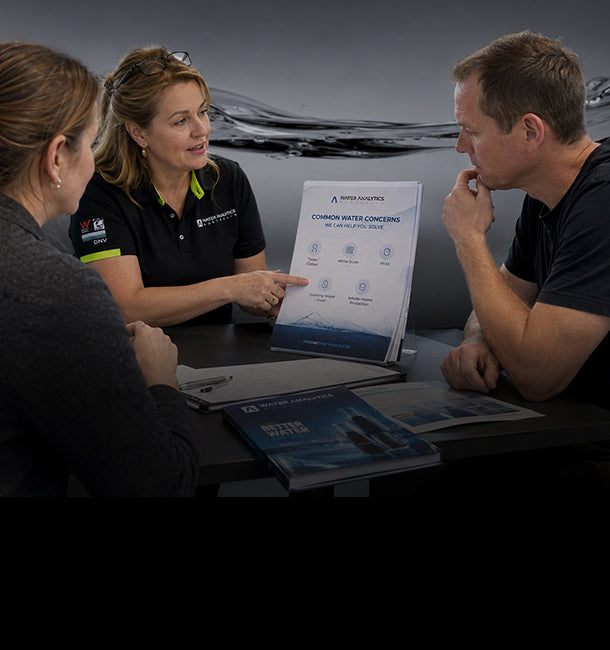
After reading, you may decide you need nothing else, want to understand one topic better, need property-specific information, know which treatment role to compare, or want an in-person explanation. Each is a valid outcome.

Start with the question you already have
A postcode, a smell, a scale mark, a water test, a word you keep seeing online — or simply, “I don’t know which system I need.” You do not need to solve the whole water question yourself. You only need to know where to start.